British Golf Museum
Scottish Tourist Board


  Golf Club Identification ,Things To Look For    
 

Hickory shafted clubs - In 1929, the R&A legalised steel shafted golf clubs. This leads to the assumption that many older hickory shafted clubs were made prior to this date.

Hand Forged Stamp - This stamp may not necessarily mean that the club was forged by hand, as the stamp would suggest. At the time when clubs were hand-forged, such a stamp would not have been used by the clubmaker, therefore indicating that clubs marked in this way are likely to have been drop-forged and hand finished.

Iron Head Face Markings - Prior to 1900, the vast majority of iron clubs had no face markings or scorings. Smooth faced irons were rarely used after 1910, but some were still offered for sale in club manufacturer’s catalogues for those players who resisted the new improvements.

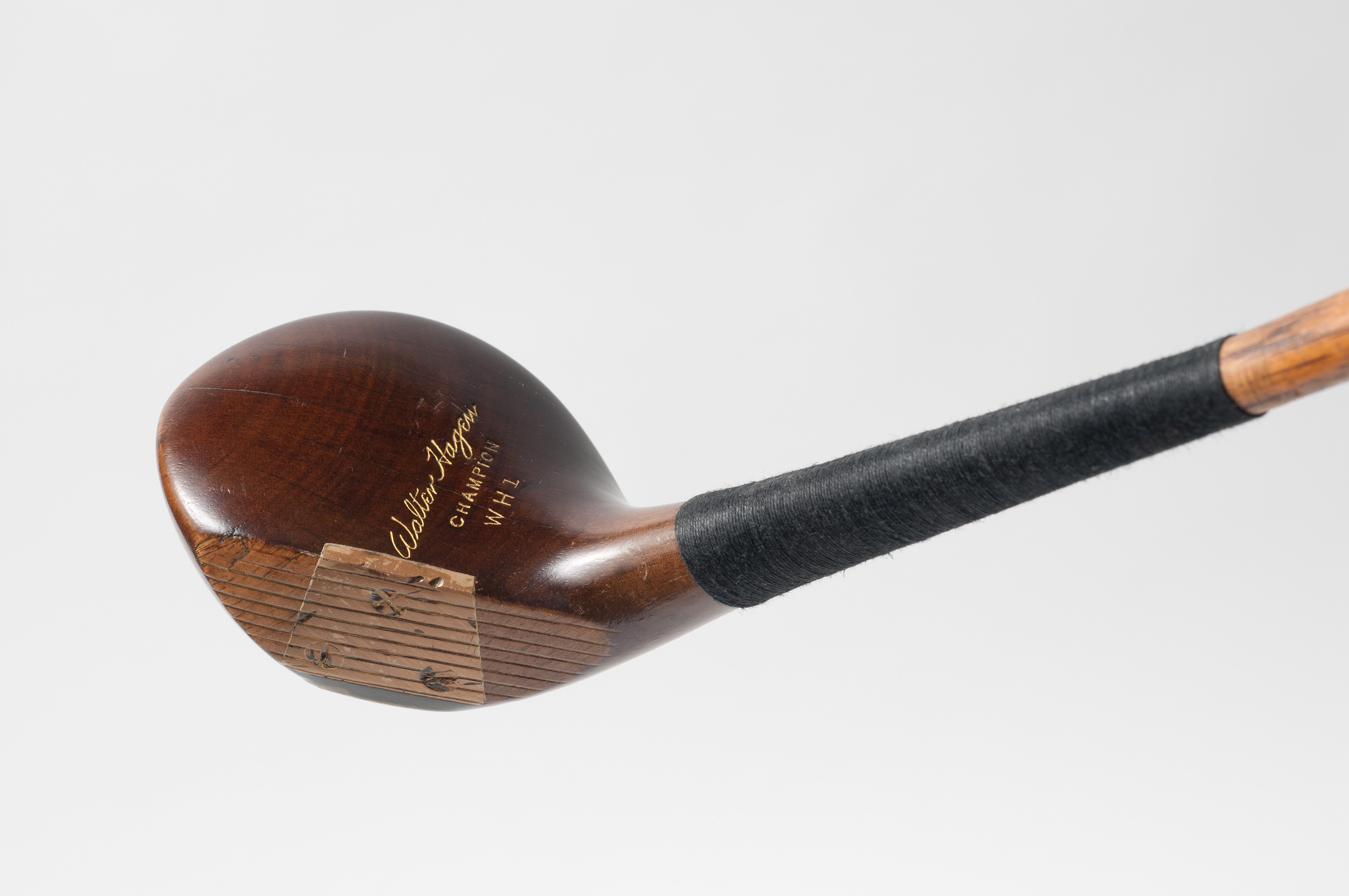
Names on Club Heads - On some golf clubs a name has been stamped on the head, often in addition to that used by the cleekmaker (whose name and mark may also be present.) These are very often the names of club professionals. Generally, they would buy the club head from a clubmaker/cleekmaker and then finish and shaft it themselves before selling it in their shop. In recognition of this, they would stamp their name on the club also.

Iron Head Shapes – There were only a few different shapes for iron heads until the 1890s when the use of irons became more common. Clubmakers began to experiment with various designs.

Golf Club Names - Players before the 20th century relied heavily on wooden headed clubs. Iron headed clubs with varying lofts began to appear gradually and by the 1920s, players were carrying twice as many irons as woods. The clubs were given names which were later used in conjunction with and eventually replaced with the numbering system used today. By the late 1940s, the number system was used exclusively by manufacturers.


Fletched Arrow & “Accurate Putter” - The fletched arrow symbol and the words “Accurate Putter” often appear in combination together. An “Arrow” mark was initially used by Alex Anderson of Anstruther, Fife on his clubs and was adapted by other clubmakers for use on their clubs. Alex Anderson’s clubs differed in that they were marked only with the arrow symbol.

The Gem Putter - The Gem Putter was made by Tom Stewart Jnr in the late 1920s or early 1930s.

Calamity Jane Putter (as used by Bobby Jones) - The original Calamity Jane putter used by Bobby Jones was a simple offset blade putter, forged by Condie and sold by William Winton. It was nearly 20 years old and was already nicknamed by the time it was given to Jones in 1920. According to a 1960 letter from Jones, he replaced the putter with a duplicate in 1926. Made by Spalding and known as Calamity Jane II, this putter helped Jones win the last 10 of his major championships. He later gave it to the USGA Museum, where it is now on public display. The original Calamity Jane is at the Augusta National Golf Club.

Jones retired from competition after winning the Grand Slam in 1930 and became a consultant to Spalding, the clubmaking giant. From 1932 Spalding produced a line of clubs under Bobby Jones’ name, at first with both steel and hickory versions. The hickory version was discontinued after a year, but millions of the steel shafted clubs were sold. From 1932 until 1973 Spalding made dozens of Calamity Jane models with both hickory and steel shafts.


HOME | NEWS | THE GALLERIES | VISITOR INFO | KIDS SECTION | SNAP SHOTS | FAQ | HISTORY | LIBRARY | ENQUIRY | LINKS

© 2001 BRITISH GOLF MUSEUM